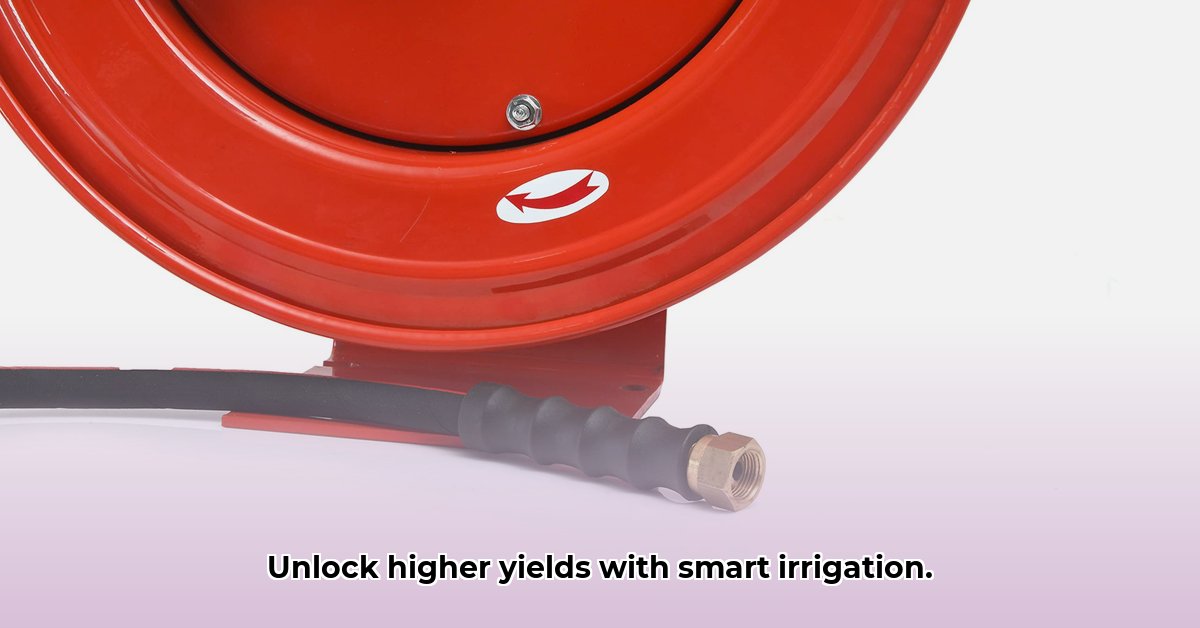
Boosting Crop Yields with Smart Irrigation: The Role of Air Hose Reel Tractor Supply
Smart irrigation is revolutionizing modern farming, offering a precise approach to water management that maximizes yields while conserving precious resources. This system provides crops with the exact amount of water needed, at the precise time, preventing both overwatering and underwatering. A reliable air hose reel system, readily available at Tractor Supply and other retailers, plays a vital supporting role, ensuring smooth and efficient water delivery. But how does it work, and what are the benefits? For more on water-efficient farming equipment, check out this resource.
Precision Irrigation: Making Every Drop Count
Traditional irrigation methods, like overhead sprinklers, often lead to significant water waste through evaporation and runoff. Precision irrigation, utilizing techniques like drip irrigation (delivering water directly to plant roots via tiny tubes) and soil moisture sensors, drastically improves water-use efficiency. How? Sensors continuously monitor soil moisture levels. If dryness is detected, the system automatically activates, delivering water only to areas that need it. This intelligent approach prevents both overwatering, which harms plants and wastes water, and underwatering, which stunts growth. This precision is crucial for optimal plant health and maximum yield. A reliable air hose reel, readily available at Tractor Supply, is a crucial component of this increased efficiency, ensuring easy management of the water delivery system without downtime due to tangles or breakdowns. Isn't optimizing water use and maximizing yield a worthwhile goal?
The Smart Economics of Water
While the initial investment in smart irrigation might seem higher than traditional methods, the long-term savings are substantial. Consider the significant reduction in water bills, healthier plants leading to increased yields, and the considerable reduction in labor costs associated with manual watering. A comparison highlights these benefits:
| Factor | Traditional Irrigation | Smart Irrigation |
|---|---|---|
| Water Costs | High | Significantly Lower |
| Labor Costs | Higher | Significantly Lower |
| Crop Yields | Moderate | Higher |
| Upfront Investment | Lower | Higher |
| Long-Term Savings | Lower | Much Higher |
The data clearly shows that although the initial investment in a smart irrigation system is higher, the substantial long-term savings in water and labor costs, coupled with the increased crop yields, make it a financially advantageous decision for most farms.
Sustainable Farming: More Than Just Water
Smart irrigation is a cornerstone of sustainable agriculture. By drastically reducing water consumption, it significantly lowers a farm's environmental impact, making it a more responsible and environmentally conscious approach. Furthermore, the decreased time spent on manual watering allows farmers to focus on other crucial aspects of farm management, leading to increased overall efficiency. This dual benefit – improved yields and environmental sustainability – makes smart irrigation a compelling choice for the future of farming.
Choosing the Right Irrigation Equipment: Reliability is Key
The success of any automated system hinges on the reliability of its components. The air hose reel, often a small but critical element, demands careful consideration. When selecting your air hose reel from Tractor Supply or similar retailers, prioritize these features:
- Durability: Opt for a rust-resistant reel capable of withstanding the elements and daily wear and tear.
- Capacity: Ensure the reel's capacity matches your hose length requirements to avoid constant winding and unwinding.
- Ease of Use: A smoothly functioning reel with features like a crank handle or automatic rewind will save time and effort.
- Material: Choose a high-quality, durable material for longevity and reduced maintenance.
A dependable air hose reel minimizes downtime, ensuring the smooth and efficient operation of your entire irrigation system.
The Future of Smart Irrigation – What's on the Horizon?
The future of smart irrigation is brimming with innovative developments. We can anticipate even more sophisticated sensors, advanced data analytics tools, and AI-powered systems that further refine water management and optimize crop yields. Imagine systems that learn and adapt to your specific fields, automatically adjusting watering schedules based on weather forecasts and soil conditions. This represents a significant step towards hyper-efficient and sustainable farming practices. The integration with other precision technology will only accelerate the modernization of the agricultural industry.
How to Choose the Best Automated Irrigation System for Sustainable Farming
Key Takeaways:
- Automated irrigation significantly improves water-use efficiency, resulting in both cost savings and resource conservation.
- Smart systems optimize water delivery, leading to healthier plants and substantially higher yields.
- System selection depends on various factors, including farm size, crop type, and budget constraints.
- Technological advancements, while promising increased precision, also bring new challenges regarding data management and security.
- Thorough planning and expert guidance are crucial for successful implementation and long-term sustainability.
Understanding Your Needs: The Foundation of Smart Irrigation
Before selecting a system, a thorough assessment of your farm's specific needs is crucial. Consider these factors:
- Farm size and layout: The scale and design of your farm directly influence system requirements.
- Soil type and topography: Soil drainage characteristics and land slopes affect watering frequency and techniques.
- Crop water requirements: Different crops need different amounts of water at different stages of growth.
- Water source and availability: Your water source (well, river, municipal supply) directly impacts system design.
- Budget and available resources: Systems vary widely in cost, requiring careful consideration of your budget and available resources for installation and maintenance.
Exploring Irrigation System Options: Finding the Right Fit
Numerous automated irrigation systems cater to diverse needs. Here are some prominent options:
- Drip irrigation: Highly efficient, delivering water directly to plant roots, ideal for orchards and high-value crops.
- Micro-sprinkler irrigation: A balance between drip and sprinkler irrigation, offering targeted watering for various crops.
- Sprinkler irrigation: Suitable for large fields with hardy crops, though less efficient in water use than drip irrigation.
- Center pivot irrigation: Large-scale systems for massive fields, using a rotating arm for efficient water distribution.
The optimal system depends on your farm's specific context and requires careful consideration of the above factors. Consulting with agricultural experts is highly recommended.
Integrating Technology: Smart Irrigation and its Benefits
Smart irrigation systems leverage sensors, software, and data analytics to optimize water usage. Sensors monitor soil moisture, weather patterns, and plant health, feeding this data into a central system to control water delivery. This precision minimizes water waste and maximizes crop yields. Yet, there are potential challenges. Initial investment can be significant, while reliable internet access and data security are essential considerations.
The Role of Reliable Equipment: A Case Study with Air Hose Reels
Reliability is paramount across all system components. The air hose reel, often overlooked, is crucial for smooth function. Malfunctioning reels can disrupt the system, delaying irrigation and potentially damaging crops. Investing in high-quality, durable equipment is crucial for preventing such issues.
Long-Term Sustainability: Looking Ahead
Smart irrigation is not just about short-term efficiency; it is an investment in the long-term health of your farm and the environment. By conserving water and enhancing yields, you contribute to a more sustainable agricultural future, benefiting both your farm's profitability and the planet.